
Quick answer · Tier A corridor
Chitwan to Pokhara is about 150 km by road. Most coaches take 4–6 hours. Fares are from NPR 1,650. Main boarding: Sauraha / Bharatpur bus counters. Book live seats on Lokrio.

Compare live schedules, operators and boarding points on Lokrio. Fares from Rs 1,650.
Last Updated: August 31, 2026 · Schedules Verified: Check live search
Quick answer · Tier A corridor
Chitwan to Pokhara is about 150 km by road. Most coaches take 4–6 hours. Fares are from NPR 1,650. Main boarding: Sauraha / Bharatpur bus counters. Book live seats on Lokrio.
| Road distance | 150 km |
|---|---|
| Typical travel time | 4–6 hours |
| Fare range | from NPR 1,650 |
| Main boarding | Sauraha / Bharatpur bus counters |
| Mode | Time | Cost | Note |
|---|---|---|---|
| Tourist / deluxe bus | 4–6 hours | from NPR 1,650 | Scenic · daily seats |
| Domestic flight | 25–45 min air | Usually higher | Weather dependent |
| Private cab | Similar/faster | Premium | Door to door |
| Distance | 150 km |
|---|---|
| Travel time | 4–6 hours |
| Bus types | Deluxe, Tourist, Sofa, AC |
| First / last bus | 6:30–8:00 AM · 6:30–8:00 AM |
| Boarding points | Sauraha / Bharatpur bus counters |
| Drop points | Pokhara Tourist Bus Park (Lakeside access) |
| Price range | from NPR 1,650 |
Data: seed
Chitwan to Pokhara buses run from Bharatpur / Sauraha toward Pokhara via Mugling and Dumre — about 150 km, typically 4–6 hours. Pokhara is Nepal’s lake and adventure capital — Phewa Lake, Sarangkot sunrises, paragliding and the gateway to Annapurna treks (ABC, Poon Hill, Mardi). Easy tourist bus or flight from Kathmandu (~200 km / 6–8h by road).
Chitwan to Pokhara buses run from Bharatpur / Sauraha toward Pokhara via Mugling and Dumre — about 150 km, typically 4–6 hours.
Distance: 150 km · Duration: 4–6 hours · Check-in: 30 minutes early
Corridor: Chitwan → Narayangadh → Mugling → Dumre → Pokhara (~150 km)
| Shift | Time | Departure | Arrival | Note |
|---|---|---|---|---|
| Morning | 6:30–8:00 AM | Bharatpur / Sauraha | Pokhara Tourist Bus Park | Safari-to-lakeside link |
| Bus type | Typical NPR | Foreigner (approx.) | Seats |
|---|---|---|---|
| Deluxe / tourist | NPR 500–1,200 | USD 5–10 | 2×2 |
Live partner prices on Lokrio can differ by date and operator — always confirm before payment.
| Distance | 150 km |
|---|---|
| Duration | 4–6 hours |
| First departure | 6:30–8:00 AM |
| Last departure | 6:30–8:00 AM |
| Price range | NPR 1,650 |
| Bus types | Deluxe, Tourist, Sofa, AC |
| Last Updated | August 31, 2026 |
| Schedules Verified | Check live search |
Live schedule opens when you search your date.
Open live schedule →Most Chitwan to Pokhara coaches take 4–6 hours for about 150 km by road. Tourist and deluxe day buses often feel shorter because of fewer local stops; night sofa coaches trade speed for sleep comfort. Monsoon landslides, festival traffic and highway maintenance can add 1–3 hours. On Lokrio, check the live trip card for that day’s estimated arrival before you pay.
The Chitwan–Pokhara corridor is a standard Nepal intercity highway route used by tourist, deluxe and local coaches. Travel time varies with traffic, monsoon landslides and night schedules. Always leave buffer time in the wet season and confirm your boarding point on the e-ticket.
Season tip: October–April is usually the smoothest season for road travel across much of Nepal.
| Type | Best for | Note |
|---|---|---|
| Deluxe | Comfortable daytime travel | Better seats/suspension than basic local coaches. |
| Tourist | Day sightseeing trips | Upright seats, scenic windows, common on popular corridors. |
| Sofa | Overnight journeys | Reclining / sofa-style layouts for sleeping when offered. |
| AC | Hot Terai corridors | Air-conditioned coaches cost more; check amenity icons. |
Pokhara is Nepal’s lake and adventure capital — Phewa Lake, Sarangkot sunrises, paragliding and the gateway to Annapurna treks (ABC, Poon Hill, Mardi). Easy tourist bus or flight from Kathmandu (~200 km / 6–8h by road).
Long before backpackers discovered Lakeside, the Pokhara Valley was a fertile trade and farming basin between the mid-hills and the high Himalaya. Magar and Gurung communities still shape trail culture on the Annapurna circuit, while Newar traders historically linked the valley to Kathmandu and the Terai.
From the mid-20th century, better roads and domestic flights turned Pokhara into Nepal’s lake city. Phewa (Fewa) Lake and the reflection of Machhapuchhre became postcard Nepal; hippie-era travellers settled cafes and lodges along what is now Lakeside Road.
After the 1990s tourism boom — and despite earthquakes and pandemic dips — Pokhara remains the soft-adventure capital: paragliding, boating, sunrise viewpoints and the logistics hub for ABC, Poon Hill and Mardi Himal. The Prithvi Highway bus corridor from Kathmandu is still the classic overland approach.
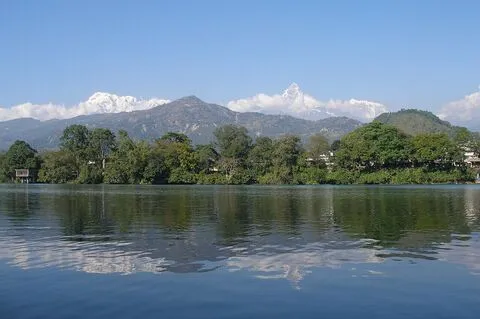
Pokhara’s iconic freshwater lake — rent a boat to Tal Barahi Temple and catch Machhapuchhre’s reflection on calm mornings.

Hilltop sunrise viewpoint above Lakeside for Annapurna and Machhapuchhre panoramas; also a popular paragliding launch.
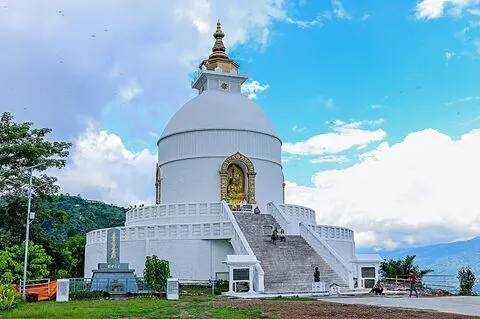
White stupa on a ridge above Phewa with lake-and-mountain views — reachable by boat plus a short uphill walk.

One of the world’s tallest Shiva statues on a hill west of Pokhara — panoramic valley and Annapurna views; popular viewpoint and pilgrimage stop.

Powerful waterfall that vanishes into an underground tunnel — dramatic in monsoon, still worth a stop year-round.
Best time: Oct–Nov and Mar–Apr for views and treks. Monsoon is green but cloudy.
The road distance from Chitwan to Pokhara is about 150 km. Actual travel time depends on traffic, season and highway works.
Most coaches take 4–6 hours. Current season note: Monsoon season (Jun–Sep) — allow extra road time.
Live fares are from NPR 1,650 on Lokrio. Pay with eSewa, Khalti, Fonepay/QR, ConnectIPS or Visa/Mastercard.
Common boarding points include Sauraha / Bharatpur bus counters. Your e-ticket shows the exact counter and reporting time.
Typical drop points: Pokhara Tourist Bus Park (Lakeside access). Confirm the stop printed on your ticket.
Available types include Deluxe, Tourist, Sofa, AC. Seat maps show deluxe, tourist, sofa/VIP and AC options when partners list them.
Based on upcoming inventory: first around 6:30–8:00 AM, last around 6:30–8:00 AM. Times change by date — search live on Lokrio.
Yes. Search the corridor on Lokrio, pick seats, pay securely and receive an instant e-ticket.
Expect rain on hill highways; landslides possible near Mugling corridor.
Primary boarding: Sauraha / Bharatpur bus counters. Your e-ticket shows the exact counter and reporting time.
Bus is cheaper and scenic for most travellers. Flights are faster when weather allows but cost more and can delay in cloud/fog seasons. Compare both on Lokrio when a domestic flight corridor exists.
About 150 km by road (4–6 hours).
The road distance Chitwan to Pokhara is about 150 km and typically takes 4–6 hours.
Most tourist / deluxe coaches leave around 6:30–8:00 AM from Bharatpur / Sauraha. Evening sofa coaches often leave around 7:00–7:30 PM. Always confirm the exact time on your Lokrio e-ticket.
Common departure points: Sauraha / Bharatpur bus counters. Your Lokrio e-ticket shows the exact counter and reporting time.
Typical tourist / deluxe fares are about NPR 500–1,200; VIP sofa seats cost more. Foreigner rates are often quoted in USD by some counters. Compare live NPR prices on Lokrio before you pay.
Pokhara is Nepal’s lake and adventure capital — Phewa Lake, Sarangkot sunrises, paragliding and the gateway to Annapurna treks (ABC, Poon Hill, Mardi). Easy tourist bus or flight from Kathmandu (~200 km / 6–8h by road).
Long before backpackers discovered Lakeside, the Pokhara Valley was a fertile trade and farming basin between the mid-hills and the high Himalaya. Magar and Gurung communities still shape trail culture on the Annapurna circuit, while Newar traders historically linked the valley to Kathmandu and the Terai.
From the mid-20th century, better roads and domestic flights turned Pokhara into Nepal’s lake city. Phewa (Fewa) Lake and the reflection of Machhapuchhre became postcard Nepal; hippie-era travellers settled cafes and lodges along what is now Lakeside Road.
After the 1990s tourism boom — and despite earthquakes and pandemic dips — Pokhara remains the soft-adventure capital: paragliding, boating, sunrise viewpoints and the logistics hub for ABC, Poon Hill and Mardi Himal. The Prithvi Highway bus corridor from Kathmandu is still the classic overland approach.
Today visitors mix slow lake days with day trips to caves, waterfalls and Begnas, or continue into ACAP trails. Booking a Kathmandu–Pokhara tourist bus keeps the journey scenic and affordable before you even reach the shore.
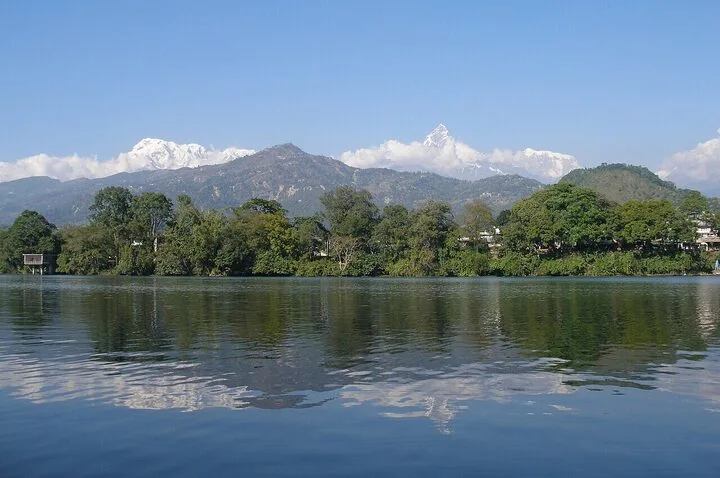


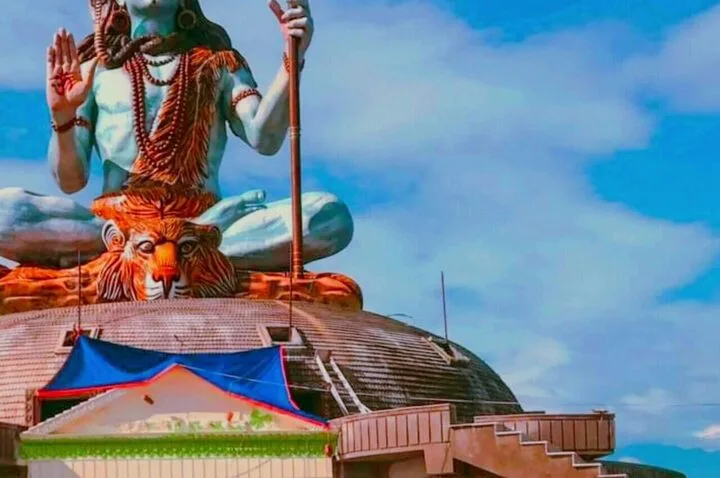
Place photos via Wikimedia Commons (open licenses).
Pokhara’s iconic freshwater lake — rent a boat to Tal Barahi Temple and catch Machhapuchhre’s reflection on calm mornings.
Hilltop sunrise viewpoint above Lakeside for Annapurna and Machhapuchhre panoramas; also a popular paragliding launch.
White stupa on a ridge above Phewa with lake-and-mountain views — reachable by boat plus a short uphill walk.
One of the world’s tallest Shiva statues on a hill west of Pokhara — panoramic valley and Annapurna views; popular viewpoint and pilgrimage stop.
Powerful waterfall that vanishes into an underground tunnel — dramatic in monsoon, still worth a stop year-round.

Sacred cave shrine near Davis Falls with a long torch-lit passage and a Shiva shrine deep inside.

Exhibits on Himalayan peaks, climbing history and mountain cultures — ideal rainy-day or pre-trek context.

Quieter sister lake east of town for boating and village views without Lakeside crowds.
Pokhara is the logistics base for ABC, Poon Hill and Mardi Himal — jeeps, permits (ACAP/TIMS) and guides start here.
Oct–Nov and Mar–Apr for views and treks. Monsoon is green but cloudy.
Weather: Monsoon — pack rain gear; trails and highways can delay.
Tourist bus 6–8h or flight ~25 min. Jeeps to trailheads from Pokhara.
Dal bhat, Momo, Thakali set, Bakeries
Tourist and deluxe coaches on Chitwan–Pokhara prioritise reserved seats, scheduled rest stops and luggage bays. Book early in peak season for window seats.
VIP and sofa layouts offer wider seats and fewer passengers. Confirm amenities (blanket, water, toilet) on the live trip card before payment.
Road distance is about 150 km. Door-to-door time depends on season — typically 4–6 hours.
Carry photo ID matching your ticket name. Soft bags fit luggage bays better than hard cases. Download your e-ticket offline before departure from Chitwan.
Pack a light cabin bag (water, snacks, power bank, layers). Keep passport/cash off the roof rack. Monsoon travellers should add a compact rain jacket.
Day tourist coaches are usually the best value on this corridor. Compare deluxe vs sofa on Lokrio before paying for VIP upgrades you may not need.
Book adjacent seats early. Prefer morning departures for families with children. Confirm child fare rules on the operator trip details.
International cards are accepted on Lokrio checkout. For India–Nepal coaches, passport and visa rules apply at the border — keep documents handy overnight.
Google rating 4.5/5 · 100 reviews